If you share a roofing system with individuals you care about, you currently run a tiny, informal security team. You cook, take care of things, host good friends, and deal with day-to-day live together. Crashes and sudden health problems turn up in this globe, not simply on worksites. The closest responder is often a housemate. With a bit of framework and the appropriate type of first aid training, a house can manage those initial crucial mins well, buying time until specialist aid arrives.
I have actually shown first aid and CPR in living spaces, area halls, institution health clubs, and office break rooms. The best results rarely come from heroics. They come from calm, simple activities done early and done right, and from individuals that practiced with each other in advance. Families and roommates who deal with first aid like component of home preparedness, similar to smoke alarms and extra batteries, are even more most likely to transform a poor minute into a convenient one.
Why home first aid is different
The home contains familiar risks that people disregard. Knives are sharp deliberately, showers get unsafe, space heating units and hair devices run warm, and youngsters or pet dogs check out with their mouths. A lot of households also have a mix old and wellness backgrounds, plus schedules that leave a person alone during stretches of the day. You are frequently much from the local defibrillator or clinic, and you might wait ten mins or a lot longer for an ambulance depending on where you live.
First aid in the house needs a broad standard. You will certainly require to manage small cuts and burns without difficulty, and also understand what to do when somebody falls down and quits breathing. Excellent first aid training creates judgment, not simply lists. It aids you acknowledge when to see and when to act, and when to dial emergency solutions also if you feel uncertain.
Picking the right first aid course for your household
A course is not a product. The right first aid course relies on your mix of people, your location, and your budget plan. Go for training that blends first aid and CPR. That mix reflects the genuine mix of risks most homes face.
If you have babies or young children around consistently, look particularly for a first aid and CPR course that covers pediatric treatment. Baby choking, febrile seizures, and safe healing positions for small bodies require hands-on technique. If you cope with somebody who has asthma, extreme allergic reactions, diabetes, epilepsy, or cardiovascular disease, confirm that the educational program includes those conditions in useful terms. Drug help and acknowledgment of warning signs ought to not be hand-waved.
Some suppliers market themselves as first aid pros with advanced situations and longer contact hours. That deepness serves if you stay in a remote location or if a minimum of a single person in the home wishes to lead drills and keep the package rectified. In cities, a conventional combined first aid and CPR training that results in a recognized first aid certificate normally fits well. Blended formats blend on the internet concept with in-person skills sessions, which lowers time far from home.
I favor courses that invest a generous portion of time on CPR training with genuine manikins and feedback gadgets. Compressions that feel right to you might not satisfy the deepness and price that supply blood to the brain. A good teacher will remedy hand placement, shoulder position, and fatigue monitoring. If there is a CPR refresher course associated with the supplier, plan to take it every twelve month. Skills degeneration fast without practice, and brief refresher courses maintain your hands honest.
Aligning the training course with your life at home
Curriculum is only half the formula. Invest 10 minutes before you sign up thinking through your home's particular risks and rhythms. If you rent out an upper-floor home with a spiral stairs, that staircase dictates just how you move a hurt individual. If you organize barbeques, burns and cuts become most likely. If you maintain yard poultries, prepare for pecks and scrapes that require extensive cleaning.
Talk regarding shift job and travel timetables as well. First aid duties should not hinge on the someone that takes place to enjoy medical topics. Aim for a minimum of 2 people across your home roster who really feel comfy leading in an emergency situation, even if they are absent every day. Teachers can customize circumstances if you ask. I have actually run practice for households entailing baby monitors, the household dog swiping gauze at the most awful feasible time, community first aid courses near me and the truth of a narrow galley kitchen.
Training day: what to anticipate and what to demand
A typical first aid and CPR course covers scene safety and security, key survey, respiratory tract monitoring, breathing support, circulation and blood loss control, shock, medical emergencies, burns, fractures, soft cells injuries, and environmental direct exposures. That sounds like a lot, but the useful components land in your hands promptly if you practice each action in context.
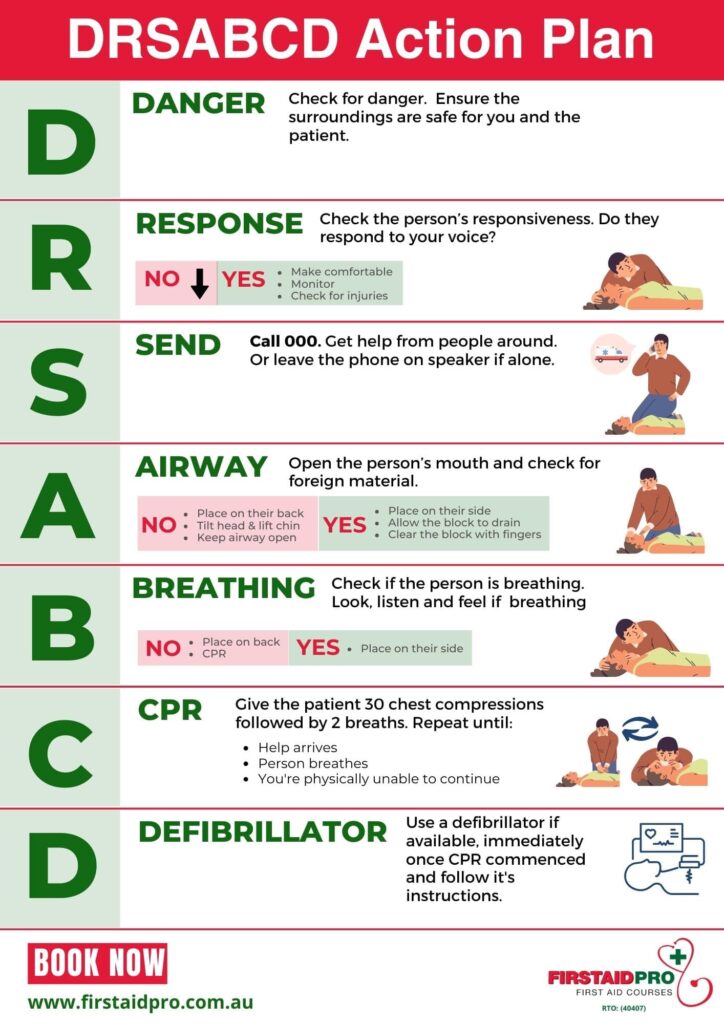
During the main study you will certainly learn to inspect responsiveness, phone call for help, open up the air passage, check breathing, and start CPR if needed. This sequence matters because it replaces panic with activity. Good fitness instructors insist that you claim what you are doing out loud. It cables the sequence into your memory and prompts others to aid with specific jobs like calling emergency situation solutions, fetching a first aid kit, or finding an AED.
Demand realistic look. Ask your instructor to run at the very least one scenario where you practice on the real surface areas you cope with. Hardwood is very different from carpet when you begin compressions. If your home has a thick rug under the coffee table, method moving a person onto a tough backboard and even a flipped doormat on the kitchen area tile. Try compressions two times in 5 mins to feel how tiredness changes your type. The peaceful hero in CPR is rotation; switching compressors every 2 minutes maintains quality.
Building a home action plan without the drama
A reaction plan should be basic adequate to bear in mind at 2 a.m. You do not need a binder with tabs. Two web pages taped to the inside of a cupboard door or in a notes app that everyone can find will certainly do. Focus on four things: that calls for help, where the gear lives, just how to connect crucial health info, and just how to guide responders to your door.
Your strategy can reside in short prose. For instance, you might concur that the individual who initially notices an emergency situation starts the check for responsiveness while screaming for assistance. The 2nd person then calls emergency services, puts the phone on audio speaker, and complies with dispatch guidelines. The 3rd retrieves the first aid kit and, if you possess one, an AED. If there is just one individual at home, the plan comes to be examine, call, then act, and that is fine. Numerous emergency situations start and end with one steady individual doing the basics well.
Document essential clinical information in a manner you can hand to -responders. A single sheet with names, ages, allergic reactions, chronic problems, regular medicines, health care contact, and insurance details saves time. Update it every six months. Add family pets and entrance codes. If you live in a complex with poor signs, include the very best approach course and any type of quirks, like a damaged elevator or a side entry that sticks.
The kit you will really use
I have actually seen very expensive first aid sets collect dust since no one wanted to open up the cool plastic case. The very best kit is apparent and obtainable, not pretty. Keep it where you can grab it without moving furnishings. Tag it in huge letters. Inspect it two times a year, in addition to smoke and carbon monoxide gas detectors.
A practical package for a lot of homes includes gloves, various plasters, sterilized gauze, glue tape, a clean fabric or 2, saline or tidy water for flushing, a tourniquet ranked for clinical use, a triangular bandage, tweezers, little injury shears, an instantaneous cold pack, hydrocortisone lotion, oral antihistamines, and a pocket mask or face shield for rescue breaths. Add an electronic thermometer and a pulse oximeter if you look after respiratory conditions. Supply kids's application syringes and weight-based application charts if kids visit.
Match your training to your equipment. If your first aid course taught injury packaging, keep hemostatic gauze. If you plan to use a tourniquet, experiment the real version in your set. Tourniquets stop working a lot more from hesitation and bad positioning than from any kind of inherent flaw. They work well when used firmly, high, and beforehand a limb bleed that does not quit with pressure.
CPR in your home: what issues in the initial 2 minutes
Cardiac arrest at home typically goes unwitnessed, which implies valuable mins pass previously any individual notices. The minute you presume it, start the chain of survival. Shout the Rockhampton first aid person's name, touch their shoulders, and look for normal breathing. Wheezing does not count. If there is no action and no regular breathing, call emergency situation services on audio speaker and start compressions.
Push hard and fast in the center of the upper body, at a rate near 100 to 120 compressions per minute. Let the upper body recoil fully after each push. Depth is approximately 5 centimeters for grownups, much less for youngsters, and 2 fingers deep for babies, adjusted by body size. Change compressors every two mins if another trained individual exists. If you have an AED, power it on and adhere to the prompts. The tool will chat you with pad positioning and analysis. Do not pause compressions longer than needed to supply a shock or adhere to the AED prompts.
Breaths assist, especially in pediatric situations and drownings, but compressions are the top priority if you are alone and unmasked. If you possess a face shield, 2 rescue breaths after each set of 30 compressions can improve end results in non-cardiac causes of apprehension. Numerous first aid and CPR courses teach hands-only CPR for ordinary responders to streamline the choice and lower hesitation. Choose the technique you can deliver right away under anxiety and practice it during your CPR course and any CPR refresher course you schedule later.
Choking, from high chairs to supper parties
Choking events unravel quick and often involve good food and laughter. The first sign is typically silence followed by wide eyes and troubled hand motions to the throat. If the person can cough forcefully or talk, urge them to maintain coughing while you see very closely. If they can not make an audio, act.
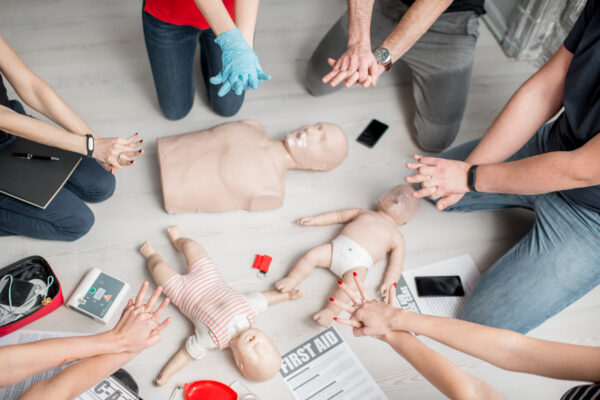
For grownups and children over one year, provide firm back strikes in between the shoulder blades with the heel of your hand, after that stomach thrusts simply over the navel, pulling inward and upwards. Alternating till the item displaces or the individual comes to be less competent. For infants, make use of 5 back slaps with the baby face down on your lower arm, head less than the body, then transform and offer five chest drives with two fingers on the breastbone. People typically neglect how tiny activities can be on small breasts. Great first aid and CPR courses put a method doll in your hands, and you really feel the rhythm and restraint needed.
Once the airway gets rid of, even if the person really feels great, check them for soreness or recurring breathing trouble. Calling a clinician for guidance is smart if you utilized stomach thrusts or if there was a duration without air. With babies, look for analysis, specifically if the event lasted more than a quick moment.
Burns, cuts, and the kitchen triangle
The kitchen area sends more people to first aid packages than any various other space. Maintain your approach simple. For small burns, cool down the area with cool running water for at least 10 mins. Ice is not your pal below; it can damage skin. Eliminate rings and limited products early prior to swelling sets in. Cover with a clean and sterile, non-adhesive dressing. Do not stand out blisters. For much deeper burns, huge areas, burns on the face, hands, feet, groin, or over joints, call for medical help. Thermal injuries keep "food preparation" after get in touch with, which is why a lengthy trendy rinse matters greater than any kind of lotion you can buy.
For cuts, apply straight pressure with tidy gauze or a towel. Altitude assists a little, yet solid stress is the workhorse. If blood soaks through, stack even more product on the top rather than raising the very first layer. As soon as hemorrhaging stops, clean with running water and light soap around the area. If the wound edges gape or you see fat or much deeper cells, it likely demands closure. For a severe arm or leg hemorrhage that does not quit with firm pressure, use a tourniquet high and limited on the limb and keep in mind the time. Anticipate considerable discomfort with an effective tourniquet; the discomfort informs you it is doing its job.
Allergies, bronchial asthma, and the shared-fridge problem
Roommates usually have different food policies, cleansing items, and family pet habits. Talk straight about serious allergies, asthma sets off, and emergency drugs. If somebody brings an epinephrine auto-injector, everyone should recognize where it is and how to utilize it. Experiment a trainer gadget if readily available. After epinephrine, telephone call emergency situation services, even if symptoms boost, and be ready to offer a second dose if breathing aggravates once more after 5 to fifteen minutes.

For bronchial asthma, keep inhalers obtainable and logged with names to prevent mix-ups. A spacer device increases medication delivery and deserves the small cost. Throughout an attack, aid the individual sit upright, urge slow, consistent breaths, and assist with their prescribed inhaler plan. If they have a hard time to talk completely sentences or you see upper body tugging around the neck or ribs, intensify to emergency care.
The psychology of calm
Households that do well in emergency situations share one behavior: they speak early. A five-minute discussion at the dinner table regarding what frightens everyone takes the sting out of shock. Young adults stress over doing something wrong and getting criticized. Moms and dads fret about their youngsters seeing them worried. Elderly loved ones stress over being a problem. Air these thoughts before you practice skills.
In training, I ask one person to be the customer, one to be the doer, onsite first aid certification and one to be the calmer. The calmer's job is to keep onlookers notified, move pets to one more space, and open up the front door. In real life, that duty keeps the scene arranged and safeguards the person doing compressions from a crowd of well-meaning hands. So two people are home, the calmer duty breaks down into fast jobs done in between compressions or after send off offers instructions.
Practice that sticks without taking control of your life
Repetition solutions memory. You do not need to pierce regular. Touch the essentials every couple of months. Establish a timer for 8 minutes and run a couch-side scenario: one person falls down during a film, the various other checks for breathing, calls emergency services on audio speaker, begins compressions on a padding, and techniques rotating without losing rhythm. One more day, exercise the baby choking series using a rolled towel. Maintain it light. If you treat method like a punitive job, nobody will certainly offer following time.
Write down small lessons learned. Perhaps the spare key is not where you thought, or the first aid set moved behind cleaning up supplies. Readjust and proceed. Mark your schedule for a CPR correspondence course within a year, and pick a new circumstance to maintain points fresh.
When to call, when to go, when to wait
If your training offers you just one solid reflex, let it be this: when doubtful, telephone call. Dispatchers coach people with first aid and CPR in actual time. They do not anticipate you to be a medical professional. They wish to hear what you see, in your own words, and they will ask concentrated concerns that lead activity. It is much better to ask for upper body pain that turns out to be reflux than to sit on a cardiovascular disease since you feared overreacting.
Driving somebody on your own can conserve time for small injuries, however there are bright lines. Do not drive an individual with upper body discomfort, stroke symptoms, serious breathing difficulty, heavy blood loss, or modified consciousness. You can not drive and enjoy their air passage at the same time. For youngsters, trust fund your impulses. A lethargic child that will not engage or consume, especially with a fever, is entitled to prompt analysis. The longer you cope with children, the extra you discover their baseline. Training includes structure to that intestine check.
Coordinating across generations and lifestyles
Households commonly mix ages and cultural approaches to health and wellness. A grandparent could lug wariness towards drugs or hospitals. An university flatmate might favor organic remedies. You do not need to settle every distinction. Agree on the emergency flooring: if breathing quits, we do CPR; if a throat swells and wheezing starts after peanuts, we give epinephrine; if a person can not lift both arms or create clear words, we call for a stroke assessment.
Language issues too. If English is not everyone's first language, practice the emergency manuscript in the most comfy tongue. Instruct a single person to claim the address and apartment number clearly in English if that is what send off calls for in your location. Article phonetic motivates near the door if required. During training I have seen stress and anxiety vanish the minute somebody understood they could hand the phone to a flatmate with more powerful language abilities while they did the hands-on work they preferred.
Technology that helps without replacing skills
Phones are better than any type of index card at bearing in mind actions, however they have limitations. A first aid application can remind you of compression rates or choking sequences throughout a calm mid-day, after that reject to open with a moist fingerprint during a crisis. Use technology to sustain, not change, muscle mass memory. Save emergency numbers as faves. Shop the household medical sheet on both paper and cloud. If you possess a smartwatch that can spot hard falls, show everyone just how to cancel duds and exactly how to respond to real ones.
AEDs have ended up being more inexpensive. If you live far from public tools and can manage a home unit, it can turn the chances throughout a cardiac arrest. Mount it where visitors can see it, and include it in your practice runs. The gadget will certainly provide voice motivates and protect against accidental shocks by assessing rhythms, but you still need to keep compressions going between prompts.
Legal and moral ground you can stand on
Most regions have Good Samaritan legislations that protect individuals that offer sensible help in an emergency without assumption of payment. These laws do not protect gross neglect, but they cover the type of good-faith actions showed in a first aid and CPR course. If somebody in your house has an advance directive or a do-not-resuscitate order, understand where it is and how your local services honor it. Clarity beforehand avoids dispute in the moment.
For houses with youngsters, understand authorization in technique. Parents or guardians provide permission for minors, yet in an emergency where a guardian is not present, consent is suggested to conserve life and prevent serious damage. This is familiar ground for experienced responders, and your first aid training must discuss it sufficient to decrease hesitation.
Sustaining readiness without fear
The objective is not to reside in a state of alert. The goal is to make safety part of the grain of your family, like tidying the counter or switching off lights in empty areas. Take a first aid course that matches your home, practice once in a while, keep a package that fits your abilities, and talk openly regarding wellness peculiarities and preferences. When something happens, you act, you take a breath, you comply with the training, and you remain on the line with dispatch up until assistance arrives.
When graduates send notes regarding real occasions, the common string is small competency. One covered holding stress on a neighbor's deep hand cut from a mandoline slicer while coaching the person to remain seated and warm, after that turning over a neat note with allergies and medicines as paramedics strolled in. One more described two roommates taking turns with compressions for eight mins on a corridor flooring till an AED from the building lobby provided the initial shock. Neither story reads like a flick. Both end with appreciation that they educated with each other and kept the essentials fresh.
If your home has actually not yet built this little safety team, start with a look for regional first aid courses that consist of CPR training and offer a recognized first aid certificate. Inquire about pediatric modules if children are in the photo, and book a CPR course or refresher within the year. The financial investment is modest. The return shows up on average days that take a hard turn, and it resembles self-confidence, synergy, and a much better possibility for individuals under your roof.